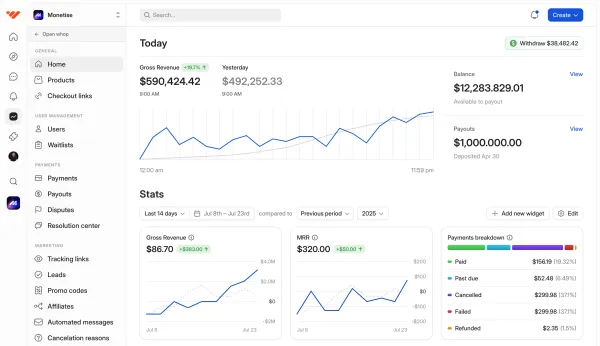
Affiliate marketing works by promoting someone else's product using a unique referral link and earning a commission on every sale. Learn how affiliate marketing works step by step, how creators get paid, the best affiliate programs, and how to start earning passive income online in 2026.
Key takeaways
- Affiliate marketing lets creators earn commissions by promoting others' products without handling inventory, shipping, or customer service.
- Creators succeed by embedding affiliate links into trusted content like reviews, listicles, and social media posts their audience values.
- Affiliate marketing offers low startup costs and passive income potential but demands consistent content creation and audience trust to generate meaningful returns.
Affiliate marketing is one of the easiest and most affordable ways to make money online. You promote someone else's product, share a unique link or discount code, and earn a commission every time someone buys through it.
No inventory, no shipping, no customer service — no hassle.
It's a massive part of the digital economy — the global affiliate marketing industry is worth over $18.5 billion and is projected to exceed $31 billion by 2031. Over 80% of brands now run affiliate programs, meaning there are more earning opportunities than ever for creators.
All you need is an internet connection, a platform, and an audience interested in what you share. In this guide, we'll break down exactly how affiliate marketing works, why it's so popular with creators, and how you can start your own affiliate business today.
What is affiliate marketing?
Affiliate marketing is a revenue model where you promote another company's product or service and get paid a commission for every sale made through your unique link or discount code.
It's most common among content creators and bloggers who already have engaged audiences. Their followers trust their recommendations, which makes affiliate links a natural extension of the content they already create.
As AB — a creator on the Whop platform — explains, affiliate marketing is one of the smoothest ways to start earning online. You're basically getting paid to recommend products you actually love:
"Let's say I have a cousin who wants to learn how to sell with TikTok shop. I can click on a whop, scroll to the bottom of the page, and add the affiliate reward to my dashboard. Then, I copy my affiliate link, send to my cousin, friend, family member, and receive that reward straight into my Whop account." - AB, Whop
There are two types of affiliate marketing:
Product links
One of the most common affiliate marketing methods is inserting affiliate links into content. These are often found on blogs and websites that produce content for a specific niche.
For example, an arts and crafts blogger may publish an article titled, 'The 10 Best Paintbrushes', posting links to buy each brush in the list. They would then receive money for everyone who clicks the link and buys the product.
Discount codes
Content creators and influencers are often sent products to review for free and given a discount code for followers to use at the checkout. They then make commissions on the products they advertise on Instagram, YouTube, and TikTok.
How affiliate marketing works for creators
To make money with affiliate marketing, you need to sign up for an affiliate program, create your content, and then insert your link and start sharing.
Here's a closer look at the steps involved:
1. Sign up for an affiliate program
The first step is signing up for an affiliate program. There are several platforms that offer these, including Amazon, which runs its popular Associates program. However, this program only provides links to Amazon products.
Some programs host affiliate schemes for hundreds — sometimes thousands — of brands under one roof. This gives you a much broader choice of products to market through your content.
Signing up tends to be straightforward, but not instant. Many programs use application processes and require proof of where you'll be hosting your affiliate links and codes.
**Whop's affiliate program** *lets you make money from creators and customers*
2. Create your content
Once you've been accepted into an affiliate program, it's time to start creating the content where your affiliate links will live.
Here are the most common types of affiliate content:
- Listicles: These make up a big portion of affiliate marketing content. They're great for capturing attention and give you a platform to showcase individual products and why they're worth buying.
- Case studies: Medium to long-form case studies showing how a real person benefited from using a product are effective for generating affiliate sales. You can go into depth about how the product works, using facts and real results to back up your point.
- Reviews: Reviews let you explain exactly why your audience should buy a certain product. You can list pros and cons, include instructions on how to use it, and leave a link to buy at the end.
- Social media posts: Short-form videos reviewing or using a product on platforms like TikTok and Instagram are one of the simplest forms of affiliate content — often just 30 to 60 seconds long.
- Emails: Sending affiliate links to your email list is an effective method of affiliate marketing, as long as you back the links up with engaging content. Hard selling via email doesn't tend to go down well with subscribers.
- Videos: YouTube is one of the biggest platforms in the world, with over one billion hours of content consumed daily. This makes it a prime host for affiliate content — you can include links in the description box below your video.
Once your content is ready, it's time to insert your affiliate links, discount codes, or coupons.
3. Inserting links and earning money
While most affiliate links work on a pay-per-sale basis, not every program works this way. Here are the three main payment models:
1. Per sale: The most common model. You receive a commission for every product sold using your link. This is also how discount codes work — you earn when your audience uses the code at checkout.
2. Per click: Some programs pay a fee every time someone clicks your affiliate link. These fees are usually lower since clicks are more common than purchases.
3. Per lead: You receive a commission every time someone clicks your link and signs up for a service — usually by entering their email address and creating an account.
Why affiliate marketing makes sense for businesses
Affiliate marketing isn't just a win for creators — it's also highly profitable for businesses. On average, businesses earn $12–$15 for every $1 spent on affiliate marketing, making it one of the highest-ROI marketing channels available.
Here's why businesses invest in it:
- Cheaper than traditional marketing campaigns: Generating affiliate links and paying commissions is considerably cheaper than rolling out full-scale ad campaigns. If an affiliate link is shared across multiple sites, product awareness grows organically without extra spend.
- Gaining non-affiliate customers: Not every customer will buy through the affiliate link. Some will make a mental note and search for the product later, bypassing the link entirely. The business gains a customer without paying a commission.
- Reaching a target demographic: Most affiliate marketers operate in a specific niche, targeting a community of like-minded readers or viewers. This is ideal for businesses — their product lands in front of people who are already interested in buying it.
The best affiliate programs for making money online as a creator
1. Whop Affiliates
Whop's affiliate program lets you earn recurring commissions by promoting products and communities hosted on the Whop marketplace. With thousands of offers available — from digital downloads and online courses to trading groups and coaching memberships — there's something to fit almost any niche.
Signing up is completely free, and Whop gives affiliates access to real-time stats, transparent payouts, and consistent earnings for every referral that stays subscribed. It's a simple, scalable way to build passive income from home.
Pros:
- Recurring commissions for ongoing referrals
- Free to join with instant setup
- Huge range of products and creator niches
- Detailed analytics and real-time tracking
Cons:
- Requires audience or traffic to earn effectively
- Limited to products sold on Whop's marketplace
2. Rakuten Advertising

Rakuten Advertising is one of the oldest affiliate marketing programs in the business, building an impressive list of brand partners since it launched in 2005. However, despite the quality of its partners, Rakuten has a smaller catalog — around 1,000 businesses on the platform.
This may be an issue if you operate in a less popular niche. But if you want access to well-known brands like Kurt Geiger and New Balance, it could be the right fit.
Pros:
- Lots of famous brand partnerships
- Pays well, depending on the merchant
- Great for beginners
Cons:
- Not a great deal of options
- Not ideal for those operating in more specific niches
3. Amazon Associates
Amazon Associates is one of the most popular affiliate programs in the world — which makes sense given the size of its parent company. Because it's Amazon, you can only provide links to Amazon products. That might sound limiting, but the site's product variety is nearly endless.
One standout perk: you earn a commission not just on the product bought through your link, but on everything the customer buys during that same shopping session.
Just note — Amazon will remove you from the platform if you fail to make three sales in the first 180 days, so it's best to join once you already have an audience.
Pros:
- Huge variety of products to market
- Amazon is good at converting traffic to sales
- Commission received on the customer's entire shopping session
Cons:
- If you fail to make three sales within 180 days, you get removed from the platform
- With commissions ranging from 1–4%, you'll have to sell a lot to make decent money
- Each country pays separately and requires different minimum payment thresholds
4. FlexOffers
FlexOffers gives you access to over 12,000 different affiliate programs under one roof. With both high-end luxury brands and smaller independent companies on the platform, there's plenty of variety.
It's free to sign up, although FlexOffers takes 6% of your earnings and charges a transaction fee on withdrawals. That's frustrating, but with so many programs at your fingertips, the platform is still worth considering.
Pros:
- Thousands of affiliate programs to choose from
- Easy to manage all your programs in one place
- Great for beginners
Cons:
- Payments take two months to arrive
- FlexOffers takes 6% of all earnings, plus transaction fees
- Minimum payment thresholds for withdrawal are high
Is affiliate marketing worth it?
Affiliate marketing can be an easy, low-cost way to earn online — but like any business model, it comes with trade-offs. Here's a breakdown of the pros and cons before you dive in.
Pros
- Cost-effective to start: You don't need to invest upfront. Most affiliate programs are free to join, and you can publish content on free platforms like YouTube, TikTok, or your own blog.
- Simple setup: Getting started usually just means applying to an affiliate network and sharing your unique link. Approval is quick and beginner-friendly.
- High income potential: The industry keeps growing as brands rely more on creators for marketing — which means more earning opportunities for affiliates. Top performers in niches like SaaS and finance can earn six figures annually.
- Endless niches: From finance and fitness to gaming and home decor, there's no shortage of affiliate products to promote.
- Passive income: Once your content gains traction, your links can earn around the clock — even while you sleep.
Cons
- No guaranteed success: You only earn when someone buys through your link, so results depend on your ability to drive real traffic and conversions.
- Crowded space: With so many people trying affiliate marketing, it takes creativity and consistency to stand out.
- Lost commissions: Some users may click your link, then buy later without it — meaning you miss out on the sale.
- Time-intensive: It's cheap to start but not quick. Building content, trust, and traffic can take months before you see meaningful returns.
Want to go deeper? Check out our guides on high-ticket affiliate marketing and the best high-ticket affiliate programs to maximize your earnings.
FTC disclosure: what you need to know
If you're doing affiliate marketing in the US, the Federal Trade Commission (FTC) requires you to disclose your affiliate relationships to your audience. This means clearly stating that you may earn a commission when someone buys through your link.
Your disclosure must be "clear and conspicuous" — placed near your affiliate links, written in plain language, and visible without scrolling. A simple statement like "This post contains affiliate links — I may earn a commission if you make a purchase" is enough.
Failing to disclose can result in fines of up to $51,744 per violation, so it's not something to skip. Beyond the legal requirement, being transparent about your affiliate relationships actually builds trust with your audience — and trust is what drives conversions.
Frequently asked questions about affiliate marketing
How much do affiliate marketers make?
Earnings vary widely. According to PayScale, the average affiliate marketer in the US earns around $56,000 per year, but beginners often earn little to nothing in their first 6–12 months. Top performers in high-value niches like SaaS, finance, and health can earn well over $100K annually.
Do you need a website for affiliate marketing?
No. While a blog or website gives you more control, many successful affiliates earn entirely through social media platforms like YouTube, TikTok, and Instagram, or through email newsletters.
How long does it take to make money with affiliate marketing?
Most affiliates take 3–6 months to see their first meaningful earnings. Building an audience, creating quality content, and gaining trust all take time — but once your content gains traction, it can generate passive income for months or even years.
Is affiliate marketing passive income?
It can be, once you've done the upfront work. A well-written blog post or popular video can continue earning commissions long after it's published. But creating that content requires real effort and consistency.
What's the difference between affiliate marketing and influencer marketing?
Affiliate marketing pays you based on performance — you earn a commission when someone buys through your link. Influencer marketing typically involves a flat fee for promoting a product, regardless of how many sales it generates. Many creators do both.
Affiliate marketing with Whop: the easy way to earn passive income
If you're ready to start your journey in affiliate marketing, Whop has got you covered. Whop's affiliate program pays you for referring others to products hosted on the Whop marketplace.
With a huge range of products spanning from digital coloring books to sports betting communities, Whop has something to suit every affiliate marketer's niche. We'll also provide you with detailed statistics and the ability to earn recurring payments for your referrals.
Become a Whop Affiliate today and start earning a scalable side income without leaving your home.